Toys, Games & Building Sets / PRODUCT GUIDE
Hasbro Sorry!: a simple race game built around sending opponents backward
Sorry! is a two-to-four-player race from Start to Home in which cards control movement and landing on an opponent sends that pawn back. It is easy to teach and creates loud family-game-night moments, but luck drives much of the result and the direct take-that play can frustrate children who prefer cooperation.
As an Amazon Associate I earn from qualifying purchases.
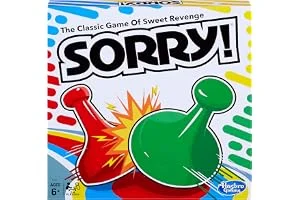
View Hasbro Sorry! Classic Board Game on Amazon (paid link) ↗
Confirm the exact Sorry! edition
ASIN B076HK9H7Z is cataloged as Hasbro Sorry! Classic Board Game. Hasbro has sold several Sorry! editions with different box art, pawns, card counts and optional rules. The official instruction archive includes older 16-pawn and newer 12-pawn versions. Match the Amazon box photos and contents list to the included rule sheet instead of assuming every edition uses the same number of pawns.
The central goal is a race from Start to Home
Players move pawns around the board toward their color’s Home area. Movement comes from cards rather than dice, and the printed card determines how a pawn can move. Landing on another player’s pawn sends it back to Start, while slides can move a pawn farther and displace pieces along the route. The first player to satisfy that edition’s Home condition wins.
Cards make the game readable but still luck-heavy
The card deck removes arithmetic-heavy dice combinations and gives each turn a clear instruction. Some cards allow a choice of pawn or a tactical switch, but players cannot control which card arrives. That makes Sorry! accessible and replayable for families, while also making it a poor fit for someone who wants deep planning or a result driven mainly by skill.
Sending a pawn back is the point, not an accidental penalty
Sorry! creates its biggest reactions when a pawn lands on another and returns it to Start. Explain that interaction before the first game and model a calm response when it happens. A child who becomes upset by direct setbacks may enjoy a shorter practice round or a less confrontational game. Do not promise a cooperative experience simply because the box is labeled for families.
Two players feel different from four
With two players, the board is easier to read and turns return quickly, but there are fewer targets and collisions. Three or four players create more blocking, bumping and waiting. Hasbro’s classic instructions support two to four players. Choose the player count based on attention span and available time, not only the maximum printed on the box.
Edition differences affect learning and replacement pieces
Older Hasbro instructions list 16 translucent pawns, while a newer official A5065 version lists 12 pawns and 45 cards. Some editions also introduce alternate power-up rules. Use the instructions packed with the exact set and keep its cards and pawns together. A replacement deck from another edition may not reproduce the same movement or component count.
The age rating is a starting point
The catalog records this edition for ages six and up, while older retail references for the same ASIN have also shown age eight-plus. The rules require following card instructions, accepting setbacks and planning among multiple pawns. A younger player may need an adult to read cards and explain choices. Small pieces also require keeping the game away from children under three.
Setup and storage are simple but the deck matters
Lay out the board, separate pawns by color and shuffle the complete movement deck. Missing cards can change the balance or make some moves impossible. Count components before donating or storing a used set, keep the cards in a small bag and avoid folding the board against its hinge. The box insert may not hold every piece securely when carried vertically.
Compare Trouble for a tactile Pop-O-Matic race
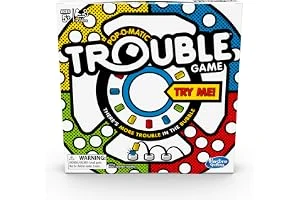
The cataloged Hasbro Trouble game is another two-to-four-player pawn race, but movement comes from the enclosed Pop-O-Matic die roller rather than a card deck. It is satisfying for children who like pressing the bubble and avoids loose dice. Strategy is still light, and players can still send opponents backward, so it does not remove the competitive frustration that defines Sorry!.
Compare Candy Land for pre-readers and gentler choices
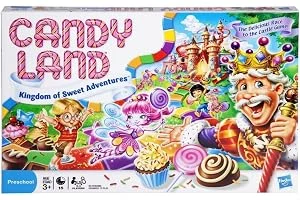
The cataloged Hasbro Candy Land is aimed at ages three and up and moves two to four players along a color path. It asks less reading and planning than Sorry!, making it easier for a preschooler to participate. It is even more luck-driven and offers fewer meaningful decisions, but it avoids Sorry!’s multi-pawn management and is a better first board-game format for many younger children.
The buying call
Choose Sorry! for two to four players who enjoy a fast, luck-driven race and can laugh when a pawn is sent back to Start. Choose Trouble for the Pop-O-Matic mechanism or Candy Land for a younger pre-reader. Verify the exact edition’s contents and use its included rules. Ryan has not claimed to own or test this specific box; this guide relies on Hasbro’s instruction archive and the exact catalog identity.
Compare the shopping options
Hasbro Trouble — Pop-O-Matic pawn race for two to four players
Hasbro Candy Land — color-path race designed for younger pre-readers
Sources and review basis
Researched November 19, 2026. Ryan’s own experience is attributed where supplied. Other judgments are buying advice based on the cited product information, not a hands-on comparison or laboratory test. Prices and availability are checked at the retailer.
- Hasbro official classic Sorry! instructions and two-to-four-player product information
- Hasbro official A5065 Sorry! product information showing the newer component count and age guidance
- Amazon listing for Hasbro Sorry! Classic Board Game, ASIN B076HK9H7Z (paid link)
- Hasbro official Trouble instructions and component guidance
- Amazon listing for Hasbro Trouble, ASIN B00D7OAOYI (paid link)
- Hasbro official Candy Land product information with age and player count
- Amazon listing for Hasbro Candy Land Classic, ASIN B00000DMF5 (paid link)