Kitchen & Dining / PRODUCT GUIDE
OXO Good Grips 4-cup fat separator: a classic stopper-and-spout design
The four-cup OXO 11273200 uses a removable stopper to keep the spout closed while hot drippings settle, then sends the lower cooking liquid out first. See where its built-in strainer, markings and larger capacity help, and when the two-cup OXO or Cuisipro’s bottom-release lever makes more sense.
As an Amazon Associate I earn from qualifying purchases.
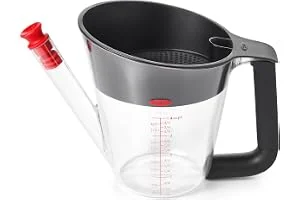
View OXO Good Grips fat separator, 4 cup on Amazon (paid link) ↗
This ASIN is the classic spout model, not OXO’s newer squeeze-trigger separator
The OXO Good Grips listing for ASIN B07V1ZSYVF identifies model 11273200, a four-cup clear separator with a low side spout and separate red stopper. OXO also sells a different Good Gravy four-cup model that releases liquid through a squeeze-operated valve in the bottom. They solve the same basic kitchen task, but their controls and cleanup are different. Check the model number and listing image before ordering so the design you expect is the one in the cart.
The removable stopper controls the order of the pour
To use this style, seat the stopper in the spout, then pour the warm pan drippings through the top strainer. Once the liquid rests, the fat rises above the denser juices. Removing the stopper opens the low spout, so the cooking liquid can flow out first while the floating fat stays in the cup. Pour slowly and stop when the fat layer approaches the outlet; tipping through the last bit can mix the layers back together.
A four-cup bowl suits a roast or a larger pot of stock
OXO lists this model at four cups, or one liter, with dimensions of roughly 6 by 9.75 by 6.85 inches. That gives more headroom than a smaller separator when you are collecting drippings from a roast or dividing a larger batch of broth. Capacity is still finite: if your pan produces more liquid than the marked fill range, work in separate batches rather than filling to the rim. Measure the shelf and sink space too; the handle and spout make it wider than a simple measuring cup.
The top strainer is useful when drippings carry cooked bits
The removable top strains larger pieces of herb, onion or browned bits as the liquid enters, and the raised shield is meant to reduce splashing during a pour. It saves reaching for a separate sieve for that step, but it is not a fine-mesh filter for every tiny particle. If you want a perfectly smooth stock, strain it through a finer sieve afterward. Lift and empty the top strainer carefully because the captured solids may be hot and greasy.
Markings make it useful beyond gravy
OXO includes measurement markings on the clear bowl, so the separator can also help you see how much broth or drippings you have collected. That is handy when a recipe calls for a measured amount of pan liquid. It remains a specialized pitcher with a spout that must be plugged for filling and a stopper that needs washing and storage. For occasional small batches, an ordinary heat-safe measuring cup and a spoon to skim the fat may already do the job.
Let the layers settle before opening the spout
The central step is waiting long enough for a visible fat layer to form. The tool does not speed the natural separation of oil and water-based cooking liquid; it gives you a controlled way to collect and pour once the layers have separated. Keep the separator on a stable, heat-safe surface while it rests. When you remove the stopper, hold the handle securely over a second vessel and watch the boundary between the clear juices and floating fat as you pour.
The loose stopper is the small part to keep track of
The original design has a separate stopper. OXO addresses that by providing a storage spot in the top strainer, which is useful when the parts are put away together. Still, it is an extra piece to remove, clean and return. The bowl and parts are dishwasher safe according to OXO, and the body is listed as BPA-free plastic and silicone. Follow the maker’s care directions and avoid leaving greasy residue around the spout or stopper seat.
Pick the two-cup OXO when your batches are smaller
The OXO 2-cup model (ASIN B07V1ZTYW5, model 11273100) uses the same stopper-and-low-spout approach, with half the stated capacity. It is a more compact fit for a small saucepan of gravy or occasional stock, while the four-cup version gives more room for a larger roast. The mechanism is familiar between them; the decision is mostly how much liquid you tend to separate and whether the larger bowl earns the storage space.
Cuisipro changes the release control while keeping four-cup capacity
The Cuisipro 747301 four-cup separator (ASIN B008N86YLK) also has a top strainer, but a thumb lever opens a bottom plug so the juices drain from below. Its maker describes a heat-resistant Tritan body, a one-liter capacity, dishwasher-safe care and a design that disassembles for cleaning. That bottom-release style may appeal if you prefer controlling flow with a lever instead of removing a stopper and tipping a pitcher. It adds a valve mechanism, so check that its disassembly and cleanup suit your routine.
The buying call
Choose the OXO 11273200 if you want a straightforward four-cup jug, built-in strainer, measurements and a low spout that pours the separated juices first. Pick the two-cup OXO if your batches are smaller; compare the Cuisipro if a bottom-release lever is the control you prefer. A basic measuring cup and spoon remain reasonable for rare gravy-making. This is source-based guidance, not a hands-on test by Ryan; confirm the model, capacity and current offer details on Amazon.
Compare the shopping options
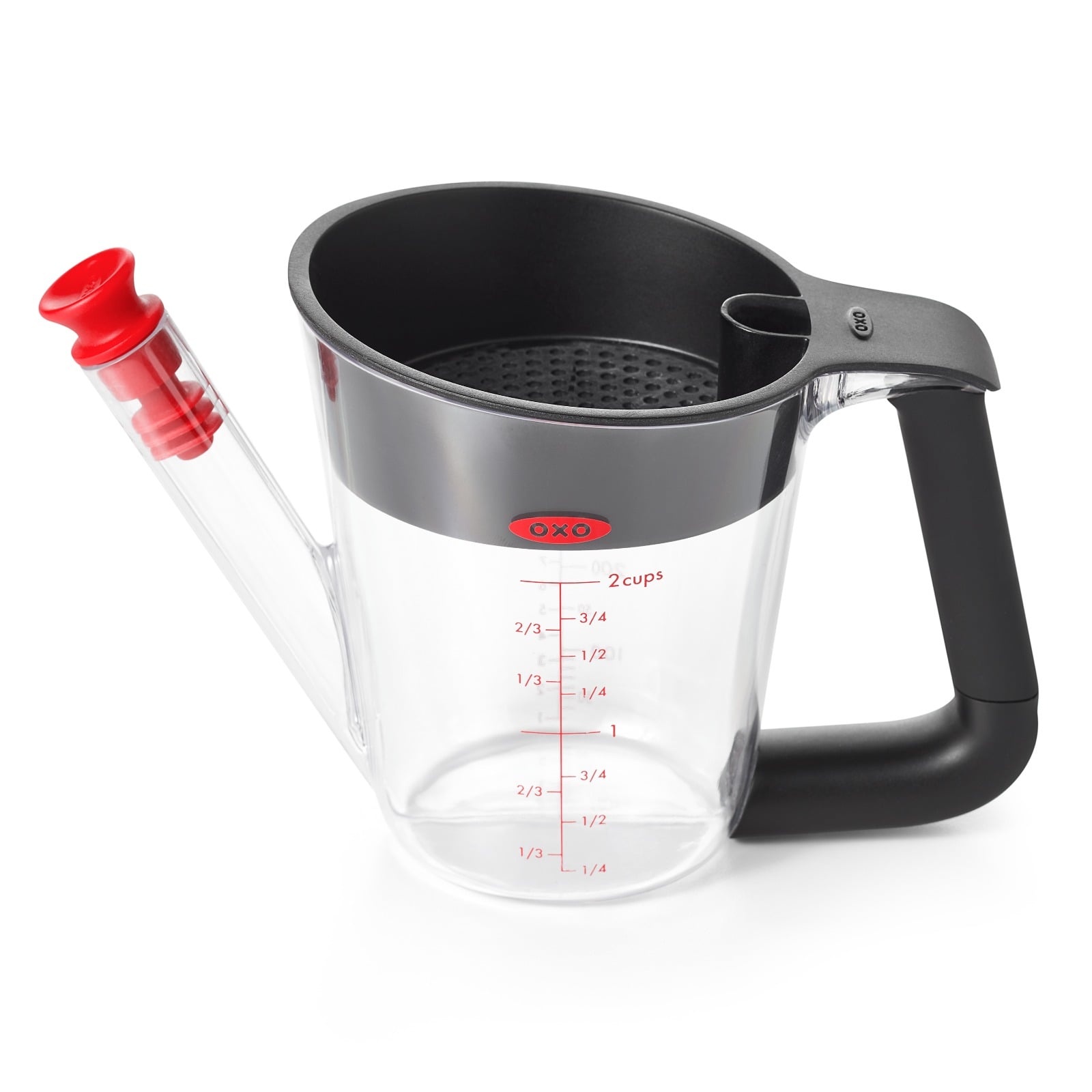
OXO Good Grips 2-cup fat separator — the same spout method in a smaller batch size
Product photo: OXO product photo
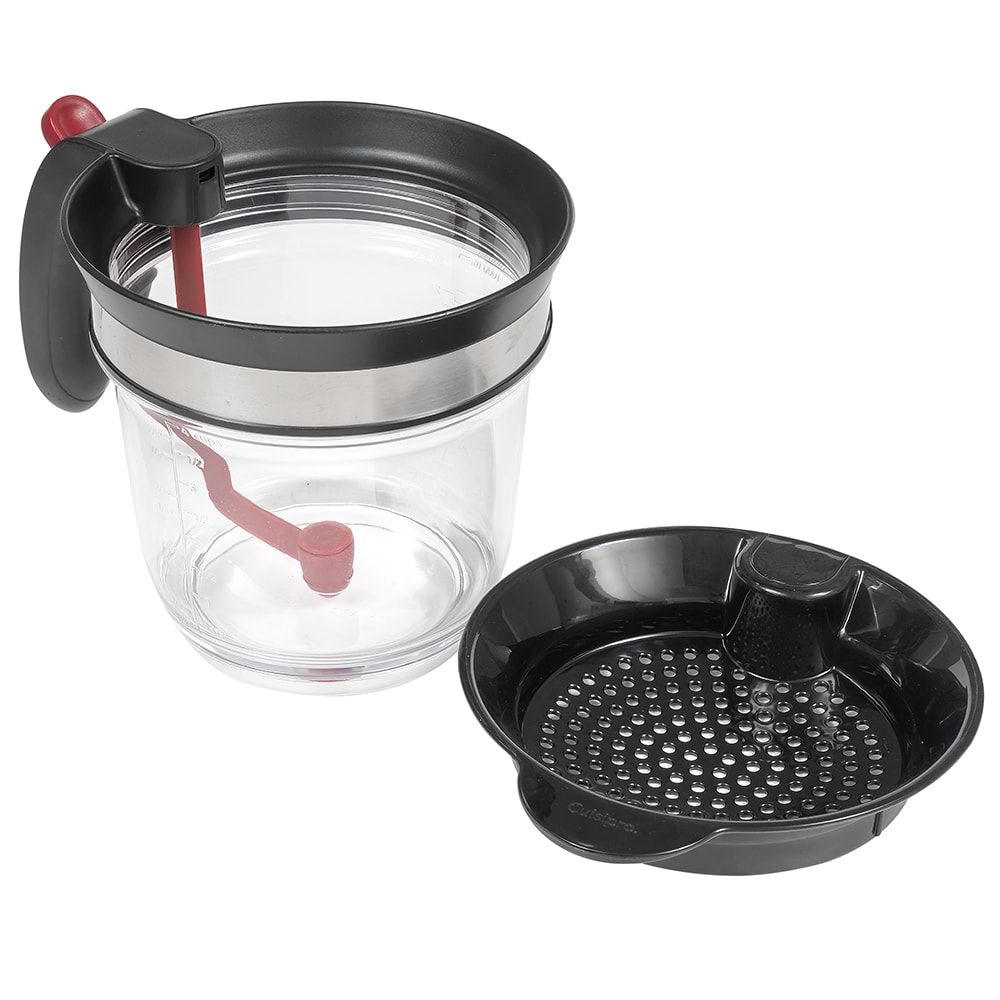
Cuisipro 4-cup separator — bottom-release thumb lever and removable parts
Product photo: Katom retailer product photo
Sources and review basis
Researched November 18, 2026. Ryan’s own experience is attributed where supplied. Other judgments are buying advice based on the cited product information, not a hands-on comparison or laboratory test. Prices and availability are checked at the retailer.
- OXO official 4-cup model 11273200 details: stopper, spout, capacity, materials and care
- OXO design explanation distinguishing the original stopper-and-spout separator from the newer Good Gravy bottom-release model
- OXO official 2-cup model 11273100 details and matching stopper-and-spout operation
- Exact Amazon ASIN B07V1ZSYVF identity and model 11273200 listing reference
- Cuisipro official Fat Separator description: 4-cup capacity, Tritan material, bottom drainage and cleaning
- Cuisipro 747301 instruction manual: straining, settling, lever operation and disassembly
- OXO 2-cup product photo and model details
- Cuisipro 747301 comparison product photo
- Product photo: OXO Good Grips 2-cup fat separator — the same spout method in a smaller batch size
- Product photo: Cuisipro 4-cup separator — bottom-release thumb lever and removable parts