Kitchen & Dining / PRODUCT GUIDE
Pyrex Deep 9×13 glass baking dish: extra wall height with a storage lid
This clear Pyrex Deep dish gives a familiar 9×13-inch footprint more wall height and includes a fitted plastic lid for refrigerated storage and transport after the glass cools. The deep shape helps contain layered casseroles and lasagna, but glass requires preheating the oven, avoiding thermal shock and removing the plastic lid before oven or microwave reheating.
As an Amazon Associate I earn from qualifying purchases.
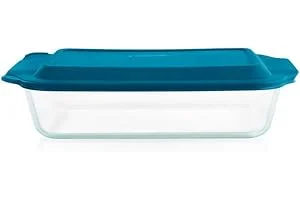
View Pyrex Deep glass baking dish with lid, 9 × 13 in. on Amazon (paid link) ↗
Confirm the exact deep dish and lid bundle
ASIN B09ZLT4FZJ identifies a clear Pyrex Deep 9×13-inch glass baking dish with a plastic lid. Exact retailer records describe the dish at roughly 9×13×2.75 inches; current Pyrex Deep products use a similarly tall three-inch class. Do not confuse it with a standard 3-quart 9×13 baker, the two-piece glass-lid version or a four-piece set. Confirm the delivered lid color and model markings if replacement compatibility matters.
The deeper walls change overflow margin, not the recipe footprint
The base remains in the common 9×13 class, so it suits layered pasta, cobbler, baked breakfast and casseroles written for that footprint. Extra height gives bubbling sauce and tall layers more containment. It does not automatically make every recipe larger: a deeper mass can need different heating time, and an overfilled dish is still difficult to carry. Leave headroom and use a sheet underneath only when the recipe and manufacturer allow it.
Glass lets you watch browning along the sides
The clear body makes it easy to see bubbling edges and the underside of a layered dish. Glass also retains heat differently from thin metal, so a recipe developed in aluminum may brown or cool at another pace. Use the recipe’s doneness cues and a thermometer where appropriate rather than changing temperature from a generic conversion rule. Set the hot dish on a dry, heat-safe surface.
Preheat the oven completely before the dish goes in
Pyrex’s current safety instructions say to use its glassware only in a fully preheated conventional or convection oven. The exposed heating element during preheat can create concentrated heat. Put room-temperature or appropriately prepared food in the dish, preheat the oven, then insert it. Pyrex specifically excludes stovetops, broilers, grills, toaster ovens and direct flame.
Avoid every sudden temperature change
Do not move the dish directly from freezer to hot oven, add cool liquid to hot glass or place hot glass on a wet or cool counter, metal surface or sink. Use dry potholders and allow the dish to cool on a rack, dry cloth or dry potholder before washing, refrigerating or freezing. Thermal-shock care matters even when the glass has survived the same shortcut before.
The plastic lid is for storage, not baking
Remove the plastic lid before the dish goes into a conventional oven and before reheating in a microwave. Let the glass and food cool according to safe food-handling practice before sealing and refrigerating. The lid helps stack and transport leftovers, but a fitted storage lid is not a pressure seal and does not make a liquid-filled casserole spillproof in a moving car.
Inspect glass before every high-heat use
Pyrex says not to use or repair glassware that is broken, chipped, cracked or severely scratched. Do not strike the rim with metal utensils or hit the dish against a sink. If glass breaks, use thick protection and assume small sharp fragments spread farther than the visible break. A storage lid should not be used to hide damage to the vessel.
Cleaning is straightforward after the dish cools
Pyrex permits hand washing or dishwasher cleaning with nonabrasive cleaners and plastic or nylon pads. Load it so it cannot bang against another hard item during the cycle. For baked-on cheese or sauce, soak only after the glass has cooled and avoid metal scraping. Dry the lid and dish before storage so trapped moisture and food residue do not collect around the rim.
Compare OXO when wide handles and a shallower 3-quart dish matter
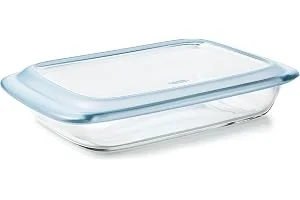
The cataloged OXO Good Grips 3-quart glass baking dish with lid measures about 15.65×9.6×3.05 inches overall, with generous handles that can be easier to grip in mitts. It is a more conventional three-quart baker and includes a storage lid. Choose it for handle ergonomics and a standard-depth workflow; choose the Pyrex Deep when taller layered food and extra wall height are the priority.
Compare Nordic Ware when crisp edges and quick roasting matter
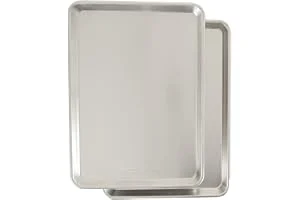
The cataloged Nordic Ware Naturals half sheet is uncoated aluminum with a broad, shallow surface. It is better suited to cookies, roasted vegetables and sheet-pan meals that benefit from evaporation and direct metal heat. It cannot contain a deep casserole or provide a storage lid. These pans solve different jobs, so a baker who cooks both lasagna and cookies may reasonably need both.
The buying call
Choose the Pyrex Deep 9×13 when you want extra wall height, clear glass and a storage lid for tall casseroles or layered pasta. Choose OXO for a shallower three-quart glass dish with prominent handles, or Nordic Ware for shallow aluminum baking and roasting. Ryan has not claimed to own or test this exact dish; this guide uses current Pyrex and OXO safety information plus an exact-ASIN product record, and avoids treating the plastic lid as oven-safe.
Compare the shopping options
OXO Good Grips 3-quart glass dish — shallower glass baker with wide handles and storage lid
Nordic Ware Naturals half sheet — shallow aluminum pan for cookies and sheet-pan roasting
Sources and review basis
Researched November 20, 2026. Ryan’s own experience is attributed where supplied. Other judgments are buying advice based on the cited product information, not a hands-on comparison or laboratory test. Prices and availability are checked at the retailer.
- Pyrex official current 9×13 Deep dish product page
- Pyrex official safety, thermal-shock and care instructions
- Exact ASIN product record for Pyrex B09ZLT4FZJ and included lid
- Amazon listing for Pyrex Deep 9×13 dish, ASIN B09ZLT4FZJ (paid link)
- OXO official 3-quart glass baking dish specifications
- OXO official glass bakeware use and care
- Amazon listing for OXO 3-quart glass baking dish, ASIN B019FHD0FK (paid link)
- Nordic Ware official Naturals half-sheet product page
- Amazon listing for Nordic Ware Naturals half sheet, ASIN B0049C2S32 (paid link)